A creative studio mark
Give a focused practice a clear front door, then let the work carry the detail.
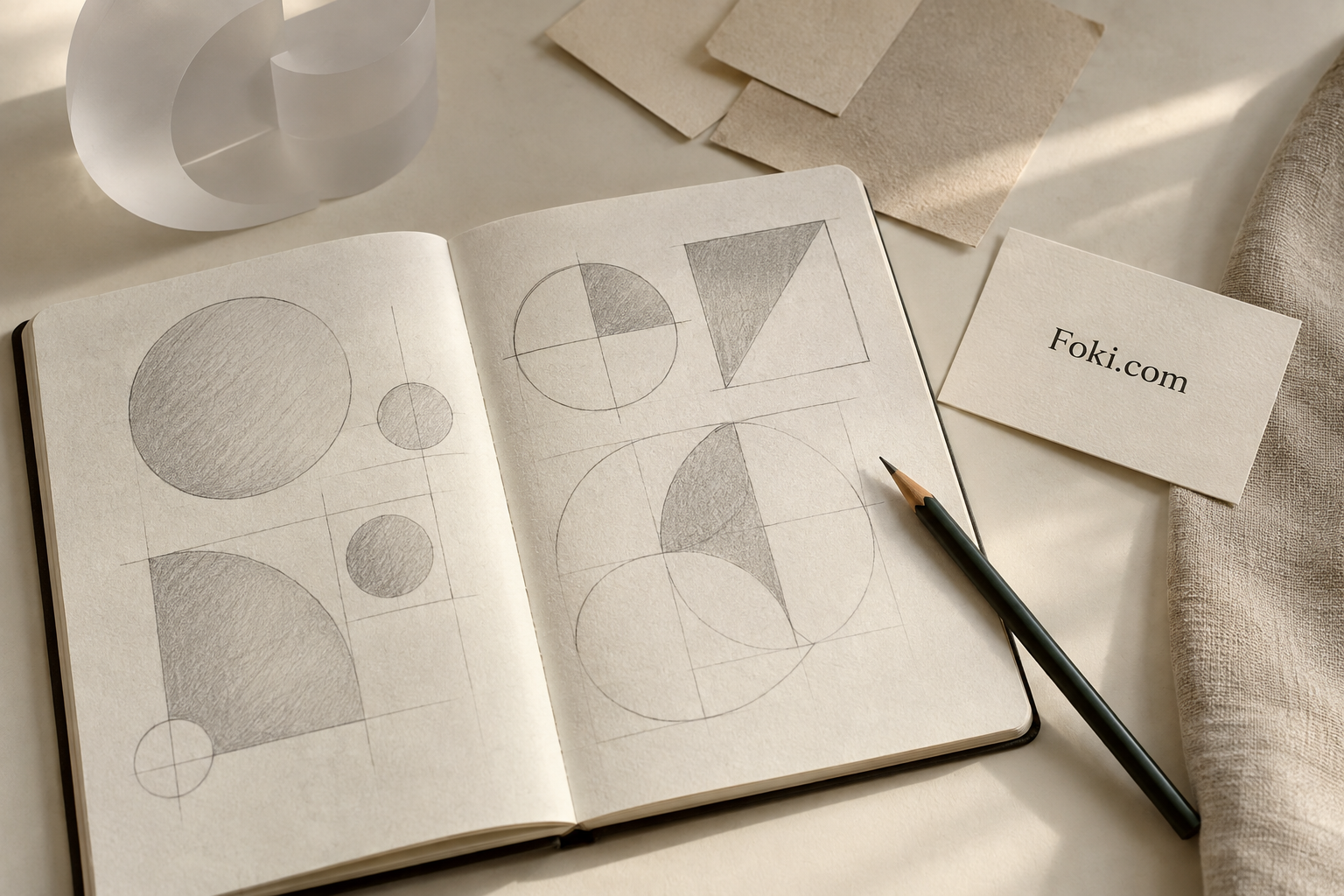
A studio name with room for a point of view
Foki.com could be the address for an independent design, film, or brand practice. The useful starting question is what that practice should be known for. A studio making short films for cultural organizations needs a different introduction from one designing packaging for new consumer products. This concept is illustrative; it does not represent an existing team, client list, or body of work.
The name can hold a distinctive practice without describing every discipline in the header. That freedom comes with a responsibility: explain the work nearby. “Identity and packaging for small consumer brands” gives a potential client a useful reason to keep reading. A vague promise of creativity leaves the visitor to work out whether the studio can help.
Choose the first kind of commission
Write a brief for the project you would like the studio to receive next. Include the client type, the deliverable, and the point at which the studio becomes involved. A business with an established identity seeking campaign film needs different help from a founder who has yet to choose a product name. Be specific about the situation you can serve well.
A focused practice could initially offer a defined identity engagement with a small set of applications. Another could center on one film format. These are possible directions, not ready-made packages. The scope should reflect the team's real abilities, collaborators, and capacity. Adding a long service list to fill a page usually makes the strongest work harder to find.
Organize the portfolio around decisions
A portfolio case should answer a few ordinary questions: what was needed, what was made, and why did the chosen approach fit? Start with the finished work, then give enough context to understand the decisions. A visitor considering a commission should not have to decode a wall of images before discovering the studio's role.
Use accurate credits. Distinguish direction, design, photography, production, and development where those contributions matter. If a project is self-initiated, label it that way. A thoughtful independent study can show taste and judgment; presenting it as a paid client engagement would undermine the trust the portfolio is supposed to earn.
Give each case a clear title
Client or project names can lead the case titles, followed by a plain description of the work. A consistent title system helps a visitor scan without making every project look identical. Keep navigation categories tied to how the practice is understood. Too many tiny categories can make a short portfolio feel fragmented.
For an illustrative packaging case, the sequence could move from the shelf view to the label hierarchy, then to the materials and production constraints. A film case might place the finished piece first, followed by selected frames and a short note on the brief. Let the medium determine the presentation instead of forcing every project through the same decorative template.
Write an introduction that can travel
A useful studio introduction should work in an email as well as on the homepage. Try two sentences: the first states the practice and audience; the second explains the particular approach in ordinary terms. If the text needs a full-screen image to make sense, it may be relying too heavily on atmosphere.
Foki.com would offer a compact address for that introduction. It can appear on a proposal cover, in project credits, and in a collaborator's referral. Read those examples at realistic sizes. A studio often meets prospective clients through someone else's message, where its identity has to survive plain text and a small preview rather than a carefully directed presentation.
Use relationships as a distribution path
A credible first route to commissions is a network of people who understand the work. Prepare a short selection of relevant projects for collaborators, past professional contacts, or organizations with an actual reason to care. Tailor the selection to the recipient's needs. The aim is to make the studio easy to refer when a suitable project appears.
An occasional project note can also show how the practice thinks. Pick one decision from a real piece of work and explain it with permission and proper credit. Avoid turning every note into a sales message. A clear explanation of a difficult design choice can be more useful to a prospective collaborator than another broad statement about ambition.
Make the next conversation easy to start
The eventual studio website should tell potential clients what information helps begin a conversation: the project, the timing, the main deliverables, and any fixed constraints. A practical inquiry route lowers the effort of making contact. It also gives the studio a better chance of recognizing a good fit before preparing a proposal.
Behind that invitation, the team needs a workable approach to scope, feedback, rights, and delivery. Those arrangements should be developed for the actual practice and its clients. A memorable mark does not answer who approves a film edit or how source files are handed over. The identity should make room for a professional relationship grounded in clear expectations.
Evaluate the address against the practice
Place Foki.com beside a few representative projects and read it with the proposed positioning sentence. Does it give the work an appropriate frame? Ask trusted peers what kind of practice they expect to find before showing them the full site. Their answers may reveal where the explanation needs to become more direct.
If the fit feels right, describe the studio's focus when inquiring about the domain. Include whether you are establishing a new practice or changing an existing address. Keep the proposed use concrete enough to discuss: the discipline, the intended clients, and the name's role in the business. The portfolio and the relationships would remain the work of its future owner.